"The real voyage of discovery consists not in seeking new landscapes but in having new eyes." - Marcel Proust
about gated communities
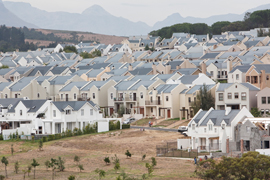
The rapidly growing phenomenon of gated communities is dramatically changing the urban landscape of South Africa.
The American geographer, Pierce F. Lewis, argues that all human landscapes reflect society's values, fears and aspirations in a visible, tangible form. In much the same way, gated communities are a physical manifestation of a culture of fear that is prevalent in South African society.
Huge tracts of land – typically on the periphery of urban areas – have been purchased and transformed by property developers into suburban enclaves that promise the buyer refuge from perceived elements that threaten their security and quality of life. These communities, surrounded by electrified fences, and protected by 24 hour security personnel, are governed by a set of internal rules and regulations that can determine anything, from who may access the community, to architectural specifications.
The growth of gated communities has promoted much debate over their impact and implications. Supporters both locally and internationally, argue that these communities reduce crime and insecurities while having an economic benefit to both the inhabitants of the communities themselves, and local authorities. Detractors, on the other hand, highlight the negative implications of spatial fragmentation, social exclusion and exclusivity. Some analysts have likened gated communities to a new form of racial and class segregation in post-apartheid South Africa.
By focusing on the periphery of gated communities, this body of work seeks to foreground the impact of these communities on the social and urban environment.